Marine equipment suppliers are often asked to check where their equipment meets the vessel design: position, access, foundations, piping, cabling, clearances or other interfaces. Xenmark gives those questions a structured place on the issued PDF so the supplier, yard, owner and engineering company can discuss the same drawing point.
It does not turn supplier comments into approved design information. The responsible engineering and yard teams still decide how each interface is incorporated into the technical drawing.
What kinds of marine supplier drawing reviews fit Xenmark?
Xenmark fits reviews where a supplier needs to comment on an issued PDF drawing rather than edit the vessel design directly. The supplier can mark the relevant location, explain the interface issue, reply to follow-up questions and review a later PDF revision.
Typical review subjects can include:
- equipment position or orientation;
- access and maintenance space;
- foundations or support arrangement;
- piping connection points;
- cable routing or electrical interfaces;
- openings, doors or adjacent arrangements that affect access;
- package boundaries between supplier, yard and designer.
These are examples of review topics, not engineering conclusions. The actual design decision remains with the party responsible for the vessel drawing.
How does a supplier point to the exact interface on a ship drawing?
Place a numbered comment directly on the relevant location in the PDF. The pin gives the interface a stable reference number, while the comment explains what the supplier needs the project team to check or clarify.
That is clearer than an email saying “please move the unit slightly” without showing which view, frame or adjacent item the request refers to. If the drawing is to scale, Xenmark’s calibrated measurement tools can also help reviewers discuss a length, perimeter or area shown on the PDF.
Measurements taken from the drawing support the review conversation; they do not replace verified site measurements or engineering calculations.
How can yards and engineers respond to supplier comments?
They can reply in the same numbered comment thread. The answer remains tied to the location the supplier marked, and statuses help the project team distinguish open points from items that have finished their review cycle.
If the Project Manager wants the supplier only to answer questions and export the review, the Participant role can be used. If the supplier needs to create new review comments, the Project Manager can use the Editor role.
Invited reviewers join free. This makes it possible to include a specialist supplier in the review without the supplier needing a paid plan of its own.
What happens when a revised arrangement drawing is issued?
Upload the revised PDF into the same drawing slot as a new revision. The supplier can refer to the earlier review history and check whether the new drawing addresses the interface discussed in the previous round.
Earlier comments remain tied to their original revision. Xenmark does not automatically move the supplier’s old pin onto the new PDF and does not decide that the interface has been resolved. The supplier, yard or engineer still reviews the new revision and makes that judgement.
If the new revision introduces another interface issue, raise a new comment on the new revision.
How does this work during newbuilds?
During a newbuild, suppliers may review arrangement, machinery, foundation, piping, electrical or other drawings issued by the yard or designer. Xenmark can bring the owner, yard, supplier and engineering team into the same PDF review when the project wants a shared comment trail.
The supplier focuses on the equipment and interfaces it understands. The yard and design team retain responsibility for the vessel design and formal issue process.
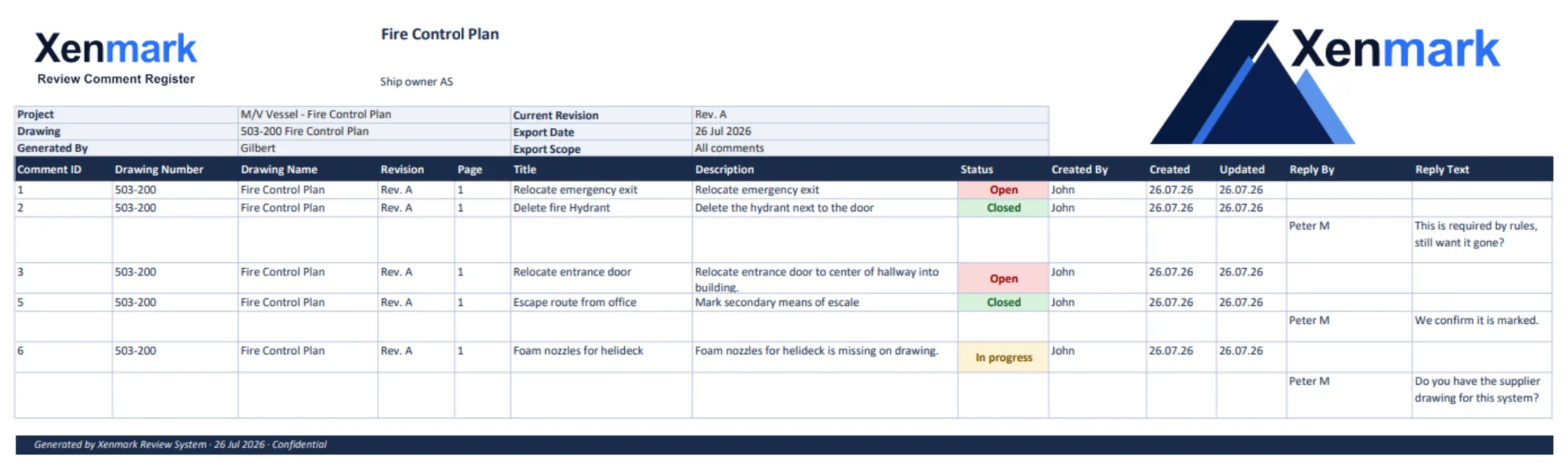
A matching PDF and Excel comment register can also provide the yard with a conventional list of the supplier’s review points after the online review.
See Newbuild Drawing Review and the Shipyards Team page.
How does the supplier role change during a retrofit or equipment replacement?
On an operating vessel, the supplier may be reviewing an existing drawing that does not perfectly match the ship, plus new drawings for the modification. Xenmark can keep known discrepancies, supplier interface comments and later drawing revisions in the same review workflow.
For example, an equipment replacement may raise questions about available space, connection points, access or adjacent systems. The owner or superintendent can mark what is known onboard; the supplier can explain its equipment requirements; and the engineering company can decide how the technical drawing should be revised.
That is a coordination workflow, not a substitute for engineering verification.
See Conversion, Refit & Retrofit Drawing Review.
Can suppliers use Xenmark to send a clean comment package back to the yard?
Yes. Xenmark can export a comment-plan PDF with the numbered pins and a matching Excel comment register. Because the same numbers appear in both, the yard can work from the list while still finding each point on the drawing.
This is particularly useful when the project expects an Excel comment sheet but the supplier wants to keep the actual review location visible on the PDF.
The export records the review. It does not change the status of the engineering drawing and is not a class, flag or statutory approval document.
Does Xenmark replace the supplier’s own design and approval process?
No. Suppliers should continue to use their own engineering tools, calculations, controlled documents and approval procedures. Xenmark is only the shared review layer for issued PDFs.
The same applies to vessel design. A supplier can say what its equipment requires or identify a potential interface, but the responsible vessel designer or engineering company determines how that information is incorporated into the ship drawing.
Xenmark is for reviewing and coordinating issued PDF drawings. It does not replace the CAD or naval-architecture software used to create the design, and it does not perform class, flag, statutory or formal regulatory approval.